

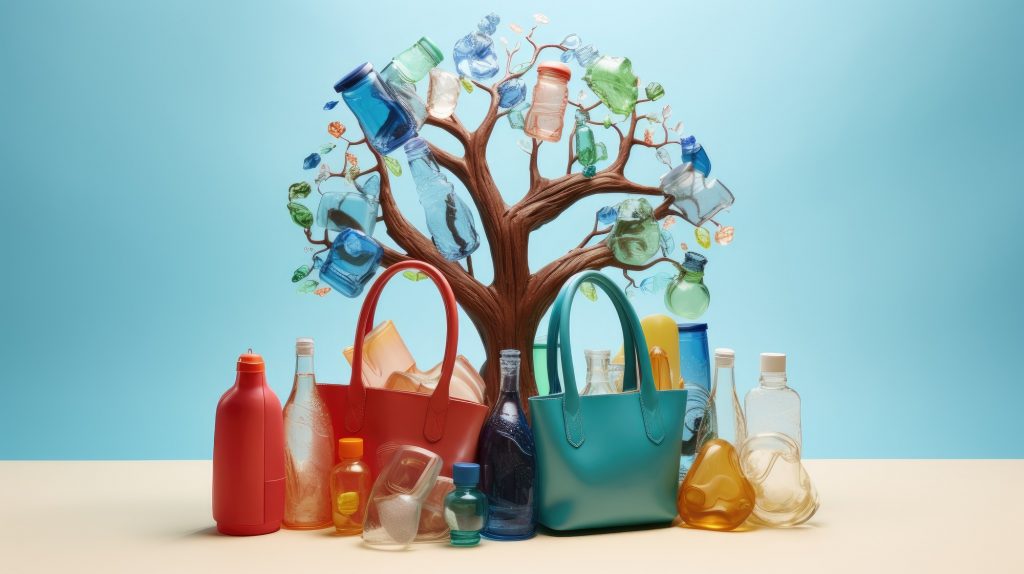
The world stands at a pivotal moment with the first-ever Global Plastics Treaty on the horizon, aiming to tackle the plastic pollution crisis. As this conversation unfolds, there’s an ongoing debate: Should we reduce plastic production, or focus on recycling and a circular economy?
Projections indicate that global plastic use will triple by 2060, reaching over 1,000 million tonnes annually. While some countries and environmental organizations advocate for capping plastic production, others—including plastic-producing nations—believe that recycling and circularity offer a more practical and sustainable solution. This issue is particularly relevant for Malaysia, which faces challenges in managing both domestic and imported plastic waste.
Why Circularity Makes More Sense Than Banning Plastics
While reducing plastic production may seem like a straightforward solution, but it doesn’t reflect the reality of our global economy, where plastic is an indispensable resource. Instead of limiting production, the focus should be on maximizing the value of plastic already in circulation by recycling it into high-quality raw materials for new products. Circularity, which involves transforming waste through recycling and upcycling into high quality raw materials, offers both a cost-effective and eco-friendly solution for the future. Here’s why:
- Cost Savings and Resource Efficiency
Embracing circularity leads to significant cost savings by turning waste into valuable raw materials. In Malaysia, 1 million tonnes of plastic waste are discarded annually, and only 24% of major plastic resins are recycled. By improving recycling systems, companies can save costs by reclaiming valuable resources rather than letting them go to waste in landfills. This also creates economic opportunities in sectors related to waste management, recycled materials, and product innovation. - Reduced Carbon Emissions
Recycling plastics consumes far less energy than producing virgin plastics, which translates to a substantial reduction in carbon emissions. According to Mark McKenna, recycling one tonne of plastic can reduce carbon dioxide emissions by about 1.7 tonnes, the equivalent of taking one car off the road for an entire year. Now imagine the potential impact on global emissions if we scale up these recycling efforts! - Preventing Plastics from Ending Up in Landfills
Adopting a circular approach can significantly reduce the amount of plastic waste that ends up in landfills and oceans. Research from Laura Parker indicates that around 8 million tonnes of plastic enter oceans each year globally. By increasing recycling rates, we can prevent millions of tonnes of waste from reaching landfills, contributing to cleaner environments, and preserving biodiversity. This is already being exemplified by companies like Adidas, which upcycles plastic waste from coastal areas into sportswear, and IKEA, which aims to use only renewable and recycled materials by 2030.
Malaysia’s Role in the Global Plastic Crisis
With over 1 million tonnes of plastic waste discarded annually, Malaysia is at a critical juncture. Beyond just managing its waste, the country has become a global dumping ground for plastic imports, further straining its waste management systems. Yet, with established infrastructure and a growing commitment to sustainability, Malaysia is uniquely positioned to embrace circularity. Rather than banning plastic production, the country can play a crucial role in the global effort to recycle and upcycle plastic waste, meeting the rising demand for sustainable materials.
Circularity is the Future
Circularity is not only the more realistic solution but also the smarter one. It offers cost savings, reduces carbon emissions, and transforms waste into valuable resources. Leading global brands like Patagonia, Adidas, and IKEA have shown that recycling is both sustainable and profitable, setting a new standard for responsible production. For Malaysia, embracing circularity presents an opportunity to address its plastic waste challenge and position itself as a key player in the global circular economy.
By investing in recycling and fostering innovation, we can prevent millions of tonnes of plastic waste from polluting our oceans and landfills, reduce our carbon footprint, and save billions in resources. Circularity is not just the future of plastics—it’s the future of sustainability.
Sources
Adidas, 2022. CREATIVITY VERSUS PLASTIC. [Online]
Available at: https://www.adidas.com.my/en/blog/361041-creativity-versus-plastic
[Accessed 11 October 2024].
Eco Business, 2024. Malaysia battles to avoid waste chokehold. [Online] Available at: https://www.eco-business.com/opinion/malaysia-battles-to-avoid-waste-chokehold/#:~:text=Malaysia%20has%20become%20a%20dumping,toxic%20additives%20making%20recycling%20impossible.[Accessed 11 October 2024].
Greenpeace, 2024. Malaysia vs Plastics. [Online]
Available at: https://www.greenpeace.org/malaysia/report/59607/malaysia-vs-plastic/
[Accessed 7 January 2025].
IKEA, 2020. A circular IKEA – making the things we love last longer. [Online]
Available at: https://www.ikea.com/us/en/this-is-ikea/sustainable-everyday/a-circular-ikea-making-the-things-we-love-last-longer-pub9750dd90/
[Accessed 11 October 2024].
International, C. R., 2024. Plastics: Countries Should Agree to a Cap on Plastic Production. [Online]
Available at: https://cri.org/plastics-countries-should-agree-to-a-cap-on-plastic-production/
[Accessed 20 December 2024].
Laura Parker, N. G., 2023. The World’s Plastic Pollution Crisis Explained. [Online]
Available at: https://education.nationalgeographic.org/resource/worlds-plastic-pollution-crisis-explained/
[Accessed 11 October 2024].
Mark McKenna, G. R., 2021. Plastic’s Role in Reducing CO2 Emissions. [Online]
Available at: https://global-recycling.info/archives/5687
[Accessed 11 October 2024].
OECD, 2022. Global Plastics Outlook: Economic Drivers, Environmental Impacts and Policy Options. Paris: OECD Publishing.
World Bank Group, 2021. Plastics Circularity Opportunities and Barriers. Market Study for Malaysia, p. 102.